
Sector
Healthcare, a large multi-hospital system
Engagement
Independent, client-side program leadership, end to end
How I was hired
Directly by the client, not through a staffing firm
Platform
Workday HCM, Finance, Supply Chain, Payroll, plus workforce management
My scope
Integrator selection through command-center go-live
Result
A controlled, command-center go-live and hypercare
A multi-hospital health system set out to replace how it runs
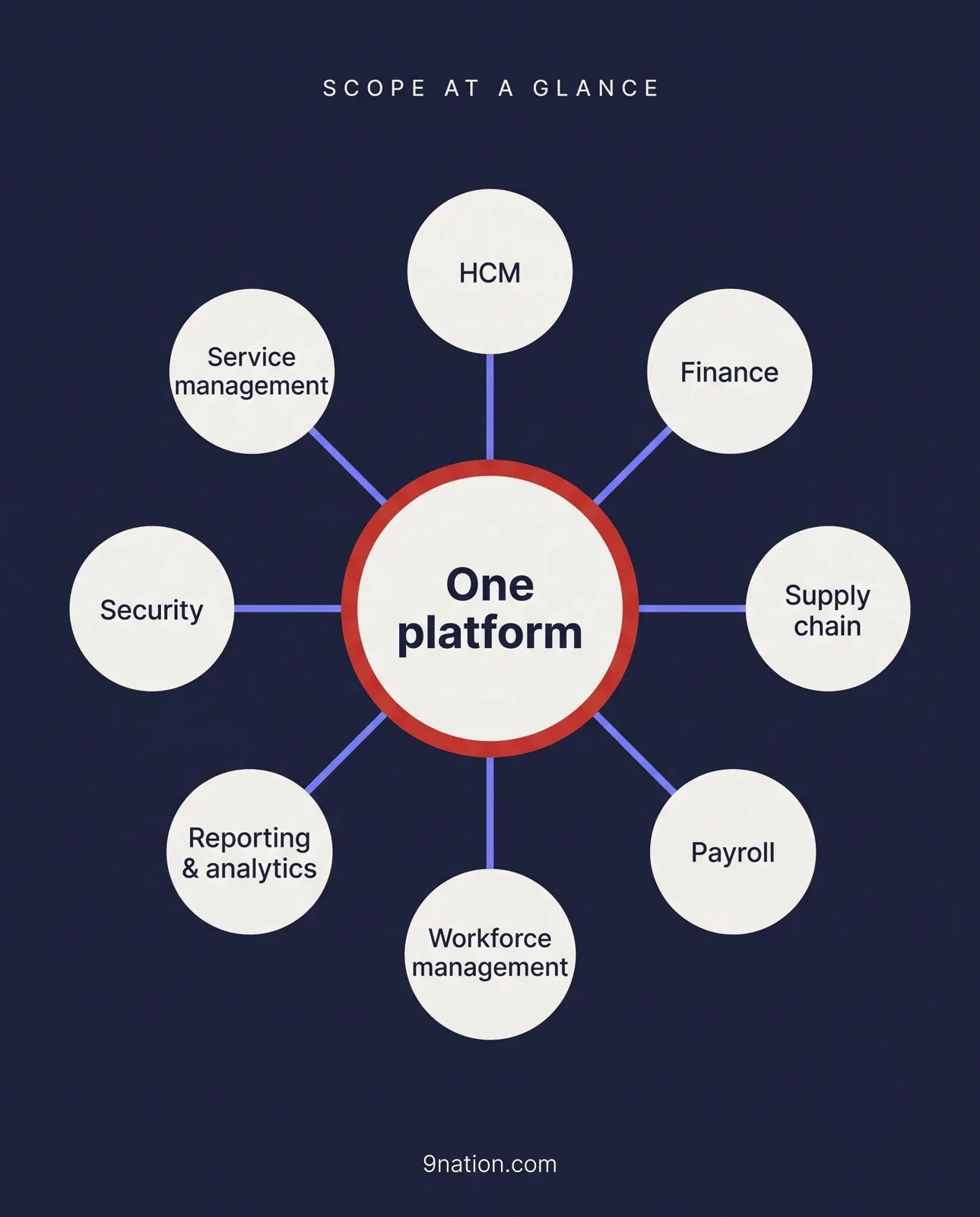
A large multi-hospital health system set out to replace the core of how it runs. HR, finance, supply chain, payroll, and the workforce management that governs how a 24/7 clinical workforce is scheduled and paid. The target was Workday for the enterprise and a dedicated platform for workforce management.
A program that size does not fail for lack of software. It fails on selection, readiness, governance, and cutover. The client wanted an experienced leader on their side of the table to own all of it, from choosing the right integrators through a controlled go-live, and to keep the vendors honest the whole way.
Owned end to end, from the client's side
I was hired directly by the health system as an independent program leader. Not placed by a staffing agency, and not part of any integrator. I led the program from the integrator selection through go-live and into hypercare, and I answered to the client, not to a firm billing the build.
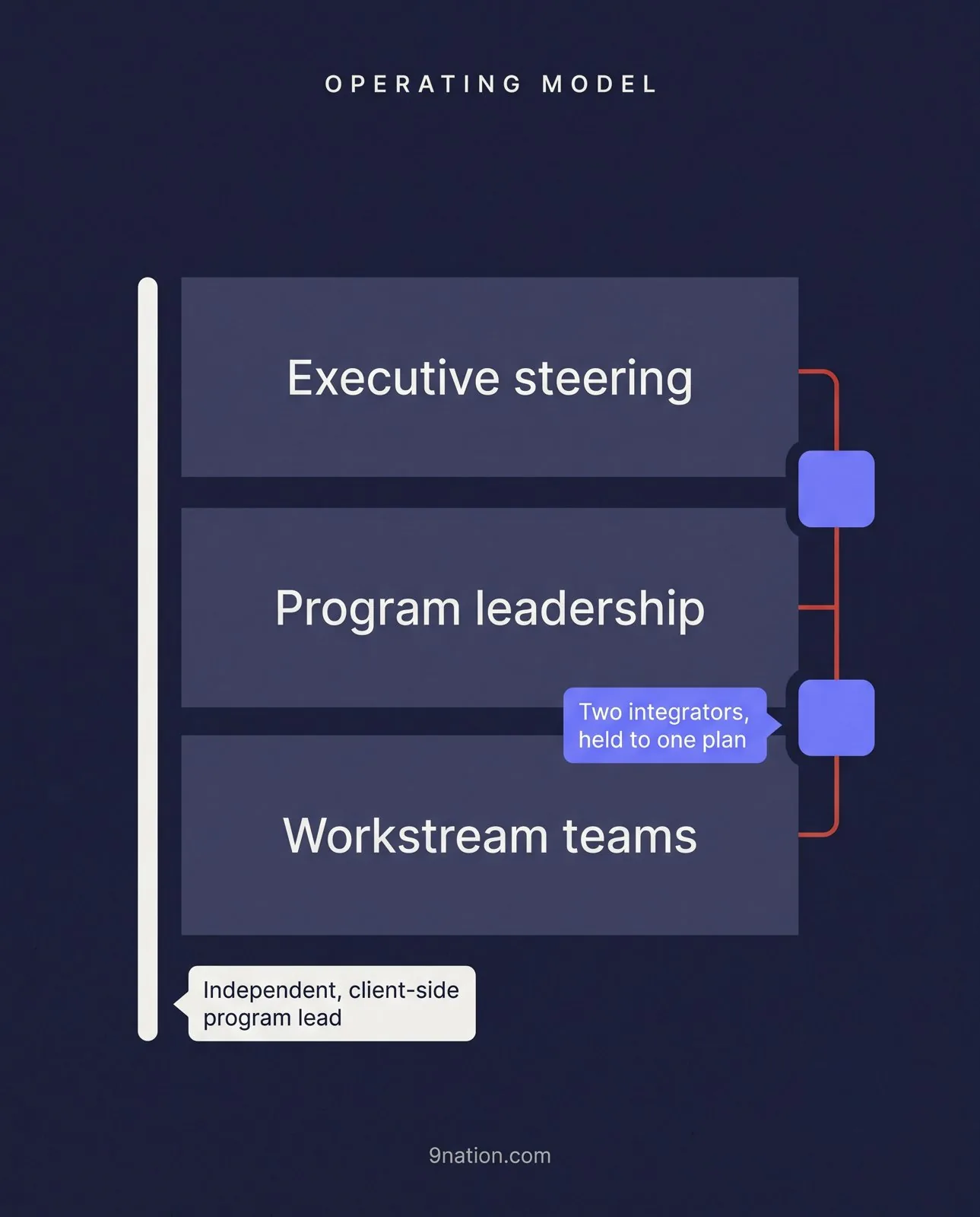
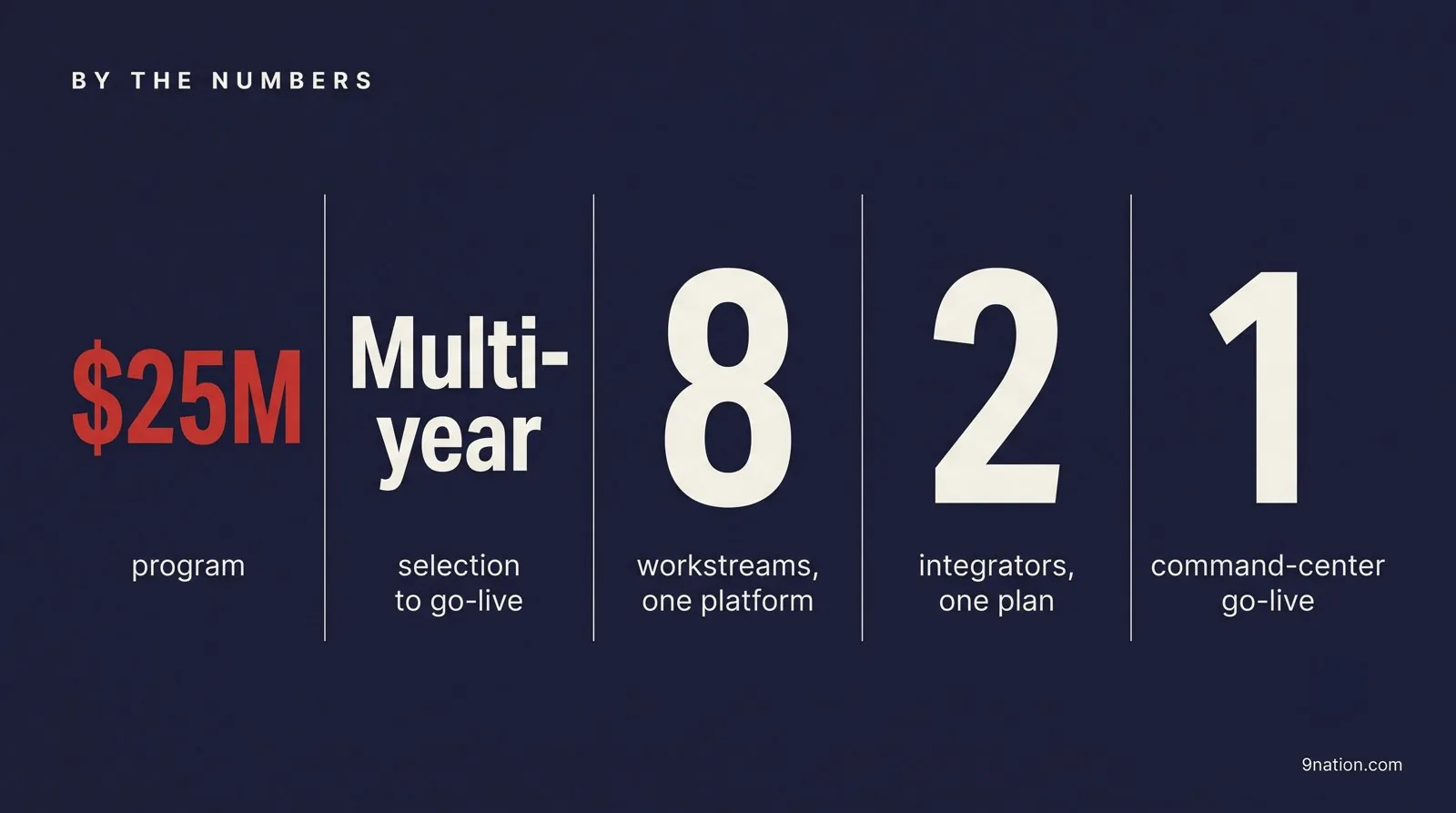
That independence mattered here more than most, because there were two integrators to manage, an enterprise partner and a workforce-management partner, plus a quality-assurance firm and several platform vendors. Someone had to sit above all of them, on the client's side, and hold the whole thing to one plan.
Integrator selection first, then the program that followed
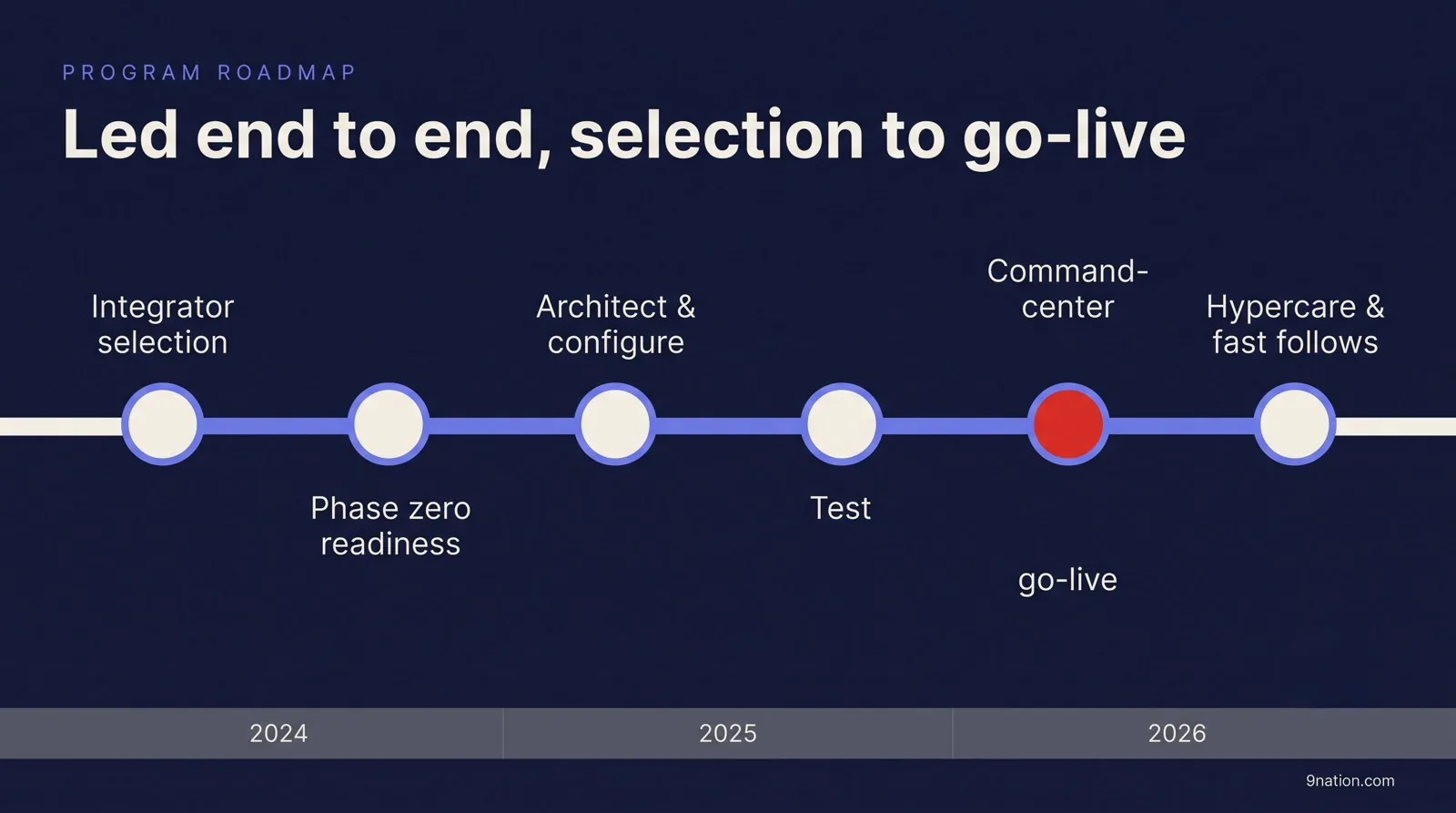
I ran the integrator selection first, a formal RFP and scorecard evaluation for both the enterprise and the workforce-management partners, scored on project management, testing, cost, staffing, deployment, technical approach, and cultural fit, through oral presentations to a final recommendation.
From there I built the business case and total cost of ownership the program was funded against, then ran phase zero readiness across every workstream: discovery, data conversion strategy, integration scope, and the change management foundation, before the build began. I stood up and ran the executive steering, the weekly status, the decision log, and a change control board, so decisions got made and recorded rather than relitigated.
Through build and test I held the integrators to the plan, ran the go-live readiness assessment against clear go/no-go criteria, and commanded the cutover from a go-live command center, with a tiered support model carrying the organization into hypercare.
Why it was hard
Healthcare makes an ERP program harder. A hospital workforce runs around the clock, with pay and scheduling rules that do not simplify neatly, which is why workforce management was its own major track with its own integrator. Two integrators means two plans, two teams, and a seam between them that only the client can own. Add heavy data conversion, a long list of integrations, and a go-live that cannot slip payroll, and the program lived or died on readiness and governance, not on configuration.
A program this size is not won in configuration. It is won in selection, readiness, governance, and the cutover.
A controlled, command-center go-live into tiered support
The program reached a controlled, command-center go-live and moved into a tiered support model and hypercare. The outcome that matters on a program this complex is not a single number. A multi-hospital system replaced the core of how it operates, across HR, finance, supply chain, payroll, and workforce management, and went live on a plan the executives could stand behind, with the integrators held to it the whole way.
Two integrators, one hard date, and each optimizing for itself
On an enterprise program with two integrators and a hard go-live, the vendors each optimize for their own scope. Only the client can own the whole. An independent program leader on the client's side, from the selection that sets the program up to the cutover that lands it, is how a health system this size gets the core of its operation onto one platform without losing control of the plan.
Client anonymized. Details available under NDA.