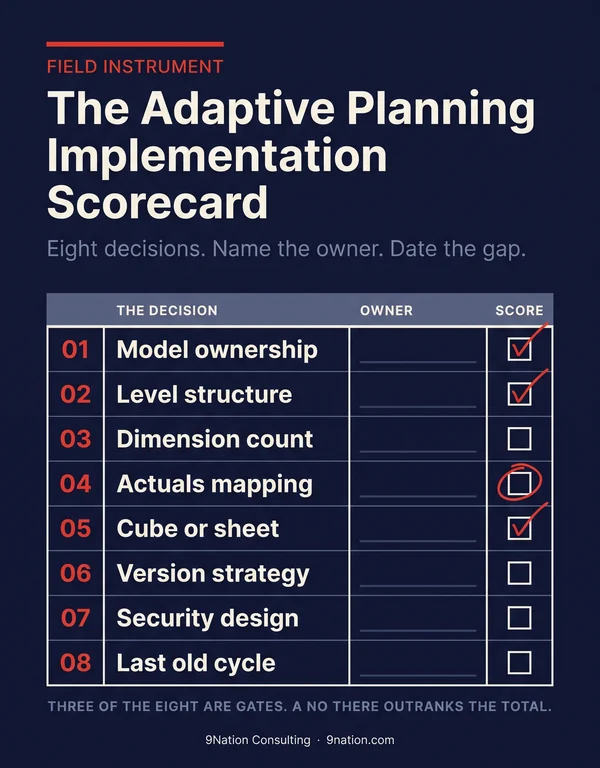
Adaptive Planning breaks on mapping, not on modeling
The model gets built in weeks. What decides the outcome is whether your levels, dimensions and actuals feed were designed against how Finance already reports.
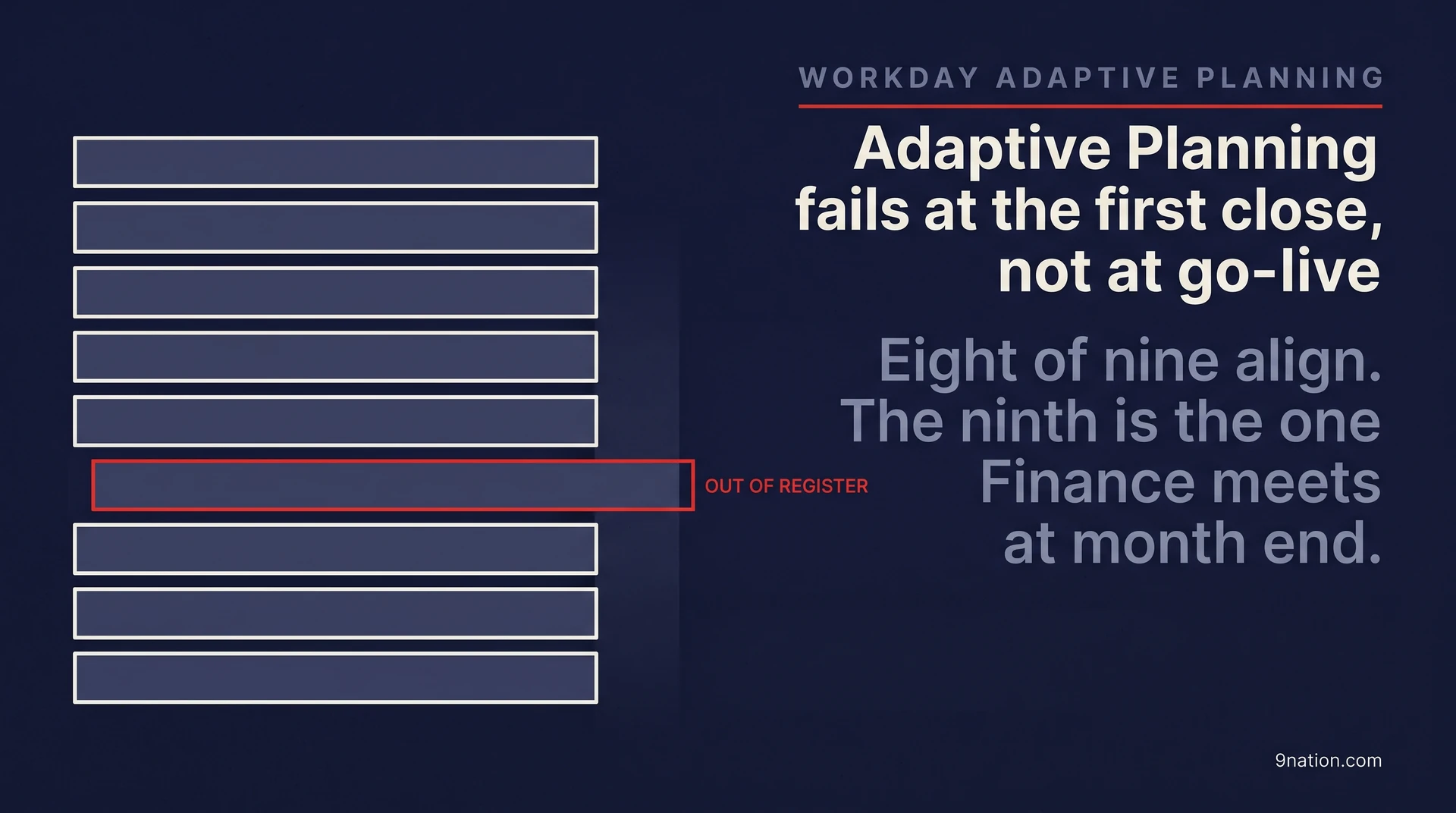
Programs do not fail at go-live. They fail at the first month-end close, when the plan structure and the actuals structure do not line up and a five-minute variance report becomes a two-day reconciliation. Three cycles later, somebody in FP&A is rebuilding it in Excel.
I work the buyer's side of that. No stake in how many hours the build burns, no partner quota, no reason to defer a hard design decision into a change order.
Start with a real timelinePlan 7 months, not 4.5
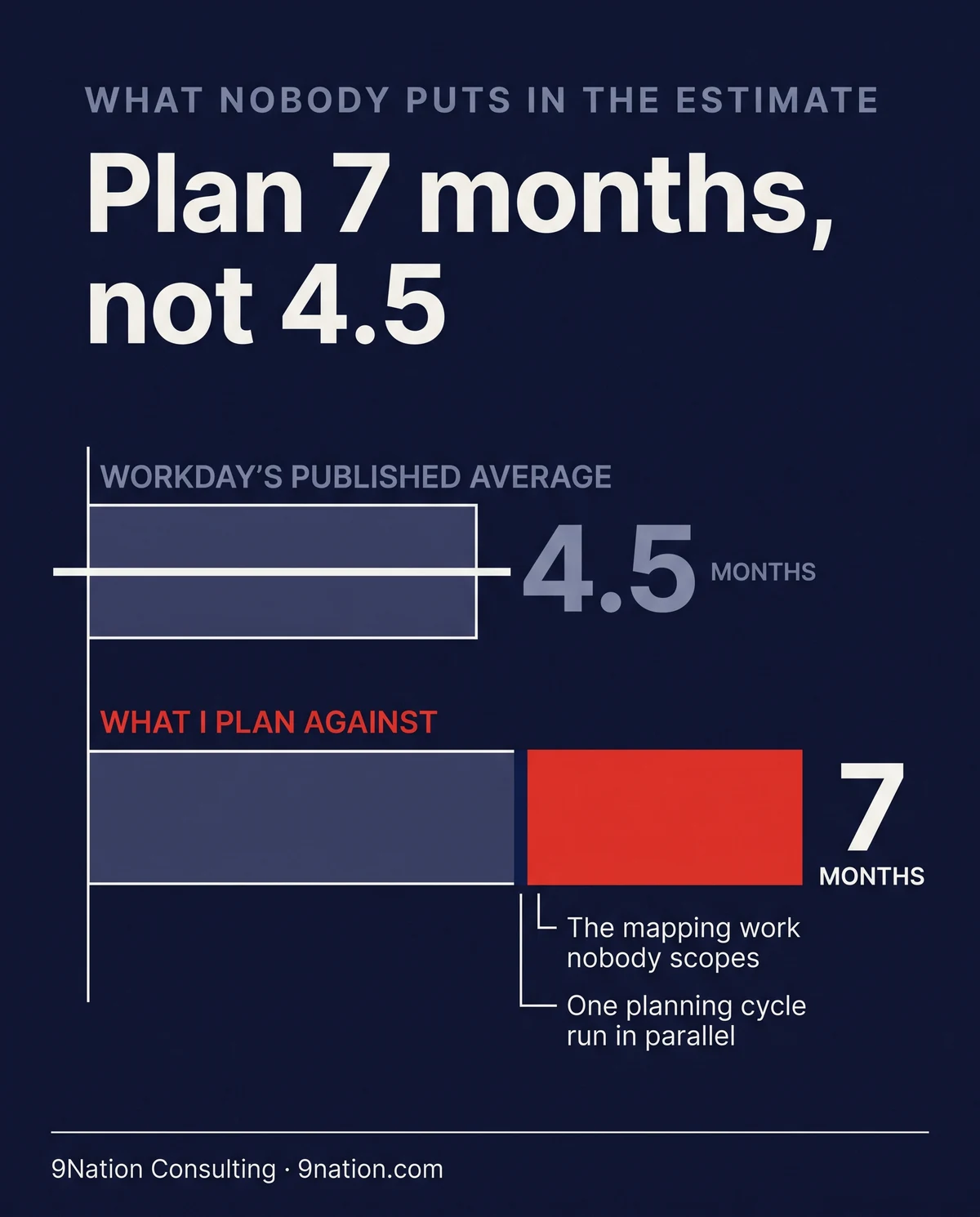
Financial planning on its own lands around 16 weeks. Add workforce, sales or consolidation and it is 8 months. The gap is not partner incompetence, it is the mapping work nobody scopes plus one planning cycle in parallel before the old process can be retired. Neither is optional. Neither is in the estimator.
What you are actually buyingA cadence, not a tool
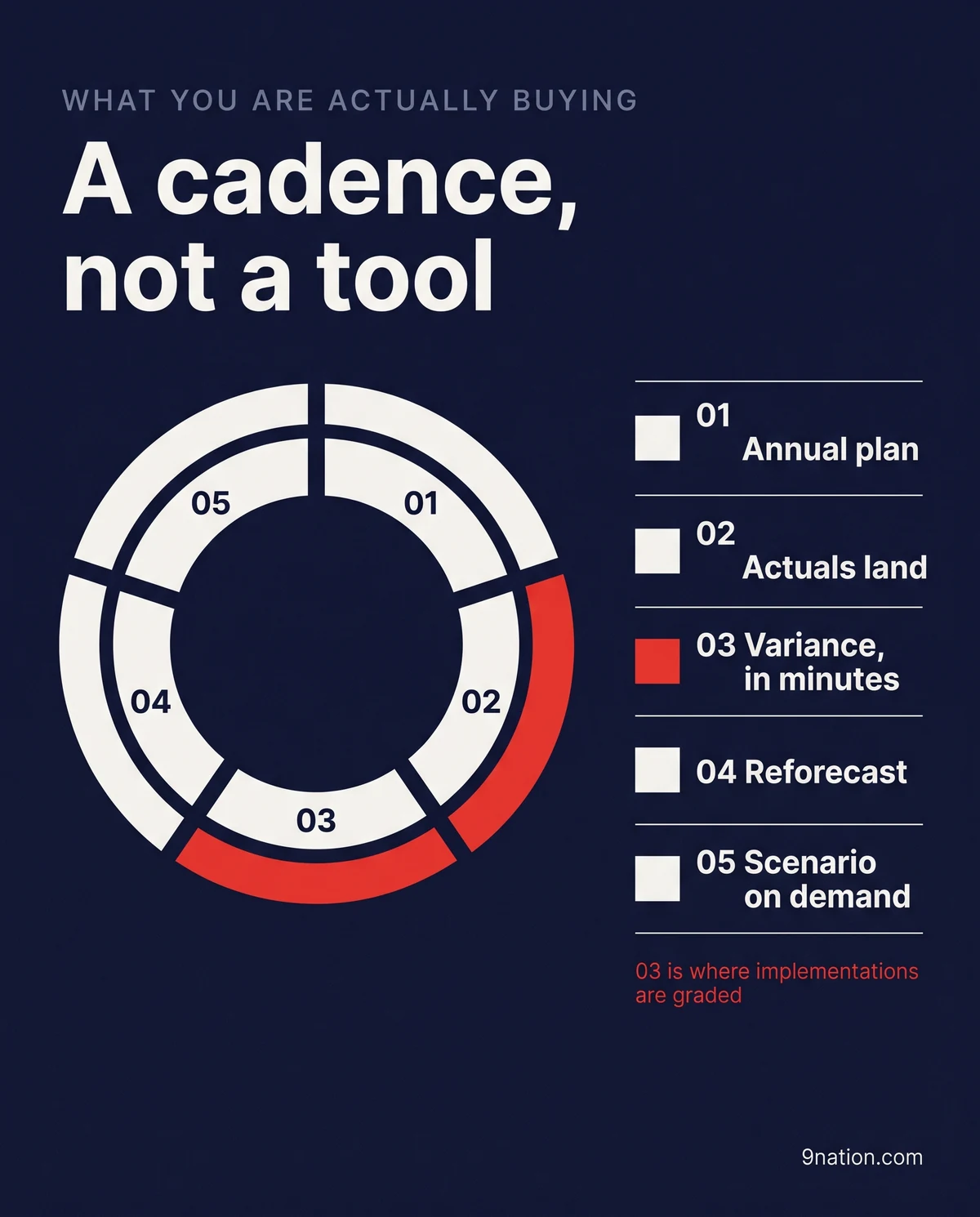
Step 03 is where implementations are graded. Fast, trusted variance reporting holds the cadence together. Without it the organization reverts to spreadsheets inside two cycles, and you have bought an expensive place to store last year's budget.
Eight decisions, each with an owner and a date
Decisions, not tasks. Every one gets more expensive the later it lands. The full guide carries the detail and what late costs you.
Five of the eight belong to people who do not think of themselves as being on the project. That is the whole problem.
Where the variance report dies
Two structures have to face each other. Designed together, actuals land and variance reporting is a version-and-period selection. Designed apart, a person translates between them every month.
Workday Financials
- Company
- Cost center
- Ledger account
- Fund, grant, program
- Organizational hierarchy
Adaptive Planning
- Level
- Level or attribute
- Account or account group
- Custom dimension
- Level hierarchy
One dashed line is the difference between a five-minute report and a two-day reconciliation.
The four patterns behind every rescue
The model is the old spreadsheets, reproduced
Every tab became a sheet. The process did not change, so none of the cycle time came back. Now it costs a license too.
Nobody owns the mapping
Finance assumes the partner owns it, the partner assumes Finance signed off, and validation failures bounce between them for weeks. The fix was one name and a date per item. It cost nothing.
The report library came over whole
On one program, 400 "critical" legacy reports collapsed to 90 against the run logs. Nobody asked for the other 310 again.
Complexity nobody remembers choosing
At one client 80 small customizations added three weeks of regression to every release, twice a year. Six weeks a year, forever.
Four shapes, depending on where you are
Scoping and readiness review
Two to three weeks. Walk the eight decisions with the people who own them and pressure-test the partner's scope and phasing. Often changes what you buy and in what order.
Client-side program leadership
I run your side. Design decisions land on schedule with a named owner, the mapping gets tested against real data early, and partner assumptions get checked before they become change orders.
Model audit and rescue
Actuals do not tie, sheets are slow, planners went back to Excel. Diagnose against the four patterns, separate what needs rebuilding from what needs governing, sequence the fix.
Planning operating model
The part nobody scopes. Who owns the model, what two releases a year do to it, how a new dimension gets approved, what quarterly cleanup covers.
The Adaptive Planning Implementation Scorecard
Eight decisions as scored questions, plus the actuals gate and the 90-day test. Two pages, built to be printed and argued over in a room. Or score it live inside the guide.